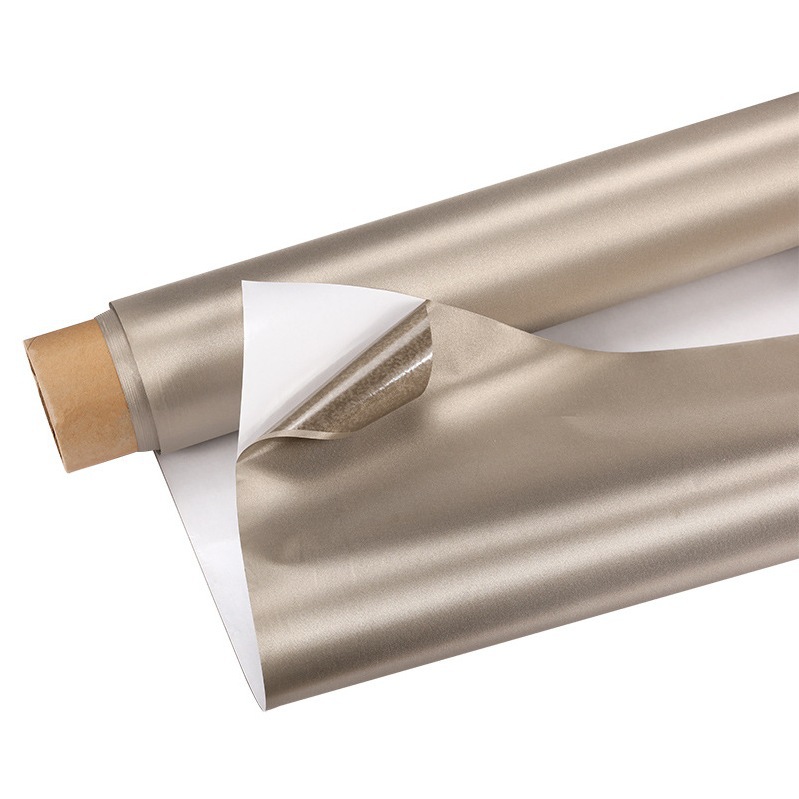
X00748
Self-Adhesive Shielding Fabric Plain Weave
Pattern: Plain · Width: 1.06 m
Fabric thickness: 0.08±0.01 mm
View X00748 specifications →
Compare copper-nickel polyester conductive fabrics with adhesive backing for electrical contact and shielding integration. Browse plain, ripstop and diamond weaves, including rose-gold and black finishes.
Self-adhesive shielding fabric combines a conductive textile with an adhesive layer and release liner. It can help integrate shielding into covers, wrapping, lining and component interfaces where a separate attachment method would complicate assembly. Final RF performance depends on continuity, seams, substrate preparation, grounding and the installed design—not on the fabric alone.
Check the needed width, dimensions, seam overlaps and ability to conform to the assembly.
Confirm adhesive conductivity, surface preparation, bond strength, temperature and aging suitability for your substrate.
Compare materials under the relevant frequency and test conditions; verify installed seams and bonding as needed.
The six models below are drawn from the OneThinktec product catalog. Open a SKU page to review full specifications and discuss samples for your application.
Pattern: Plain · Width: 1.06 m
Fabric thickness: 0.08±0.01 mm
View X00748 specifications →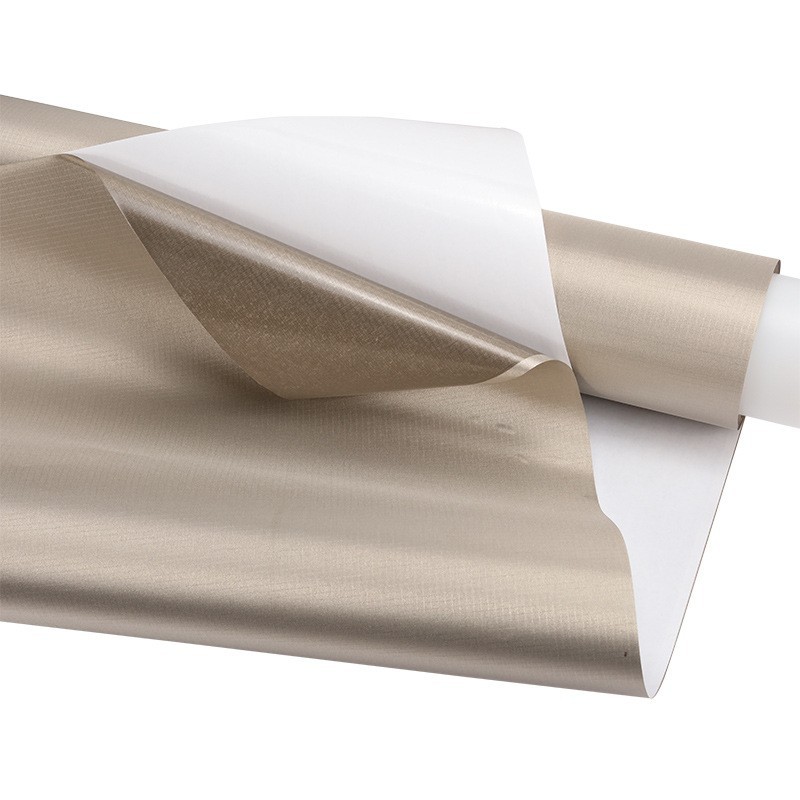
Pattern: Ripstop · Width: 1.06 m
Fabric thickness: 0.08±0.01 mm
View X00792 specifications →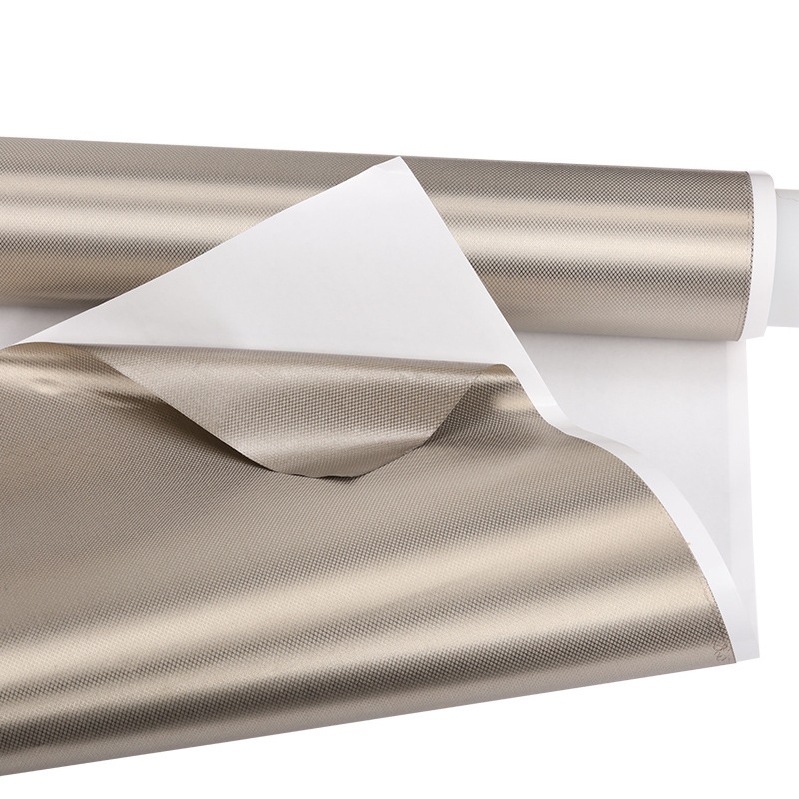
Pattern: Diamond · Width: 1.06 m
Fabric thickness: 0.08±0.01 mm
View X00793 specifications →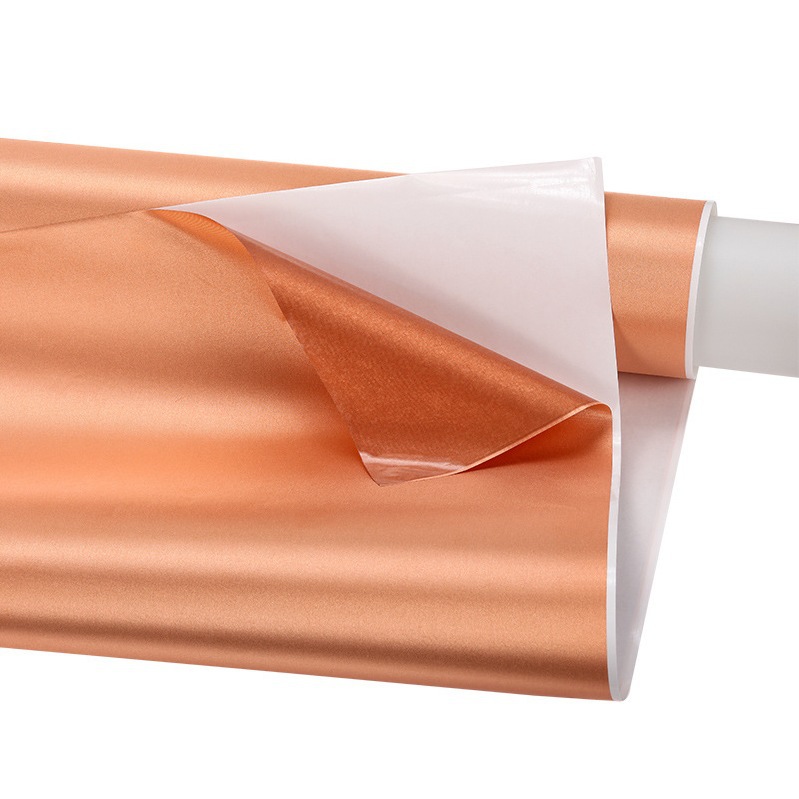
Pattern: Plain · Width: 1.06 m
Fabric thickness: 0.08±0.01 mm
View X00794 specifications →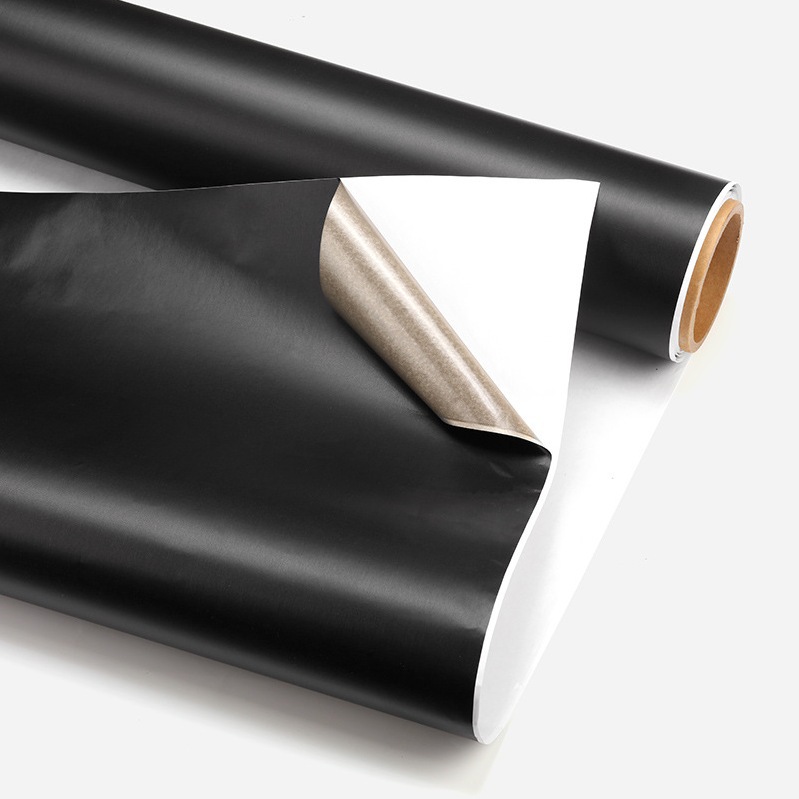
Pattern: Plain · Width: 1.06 m
Fabric thickness: 0.08±0.01 mm
View X00795 specifications →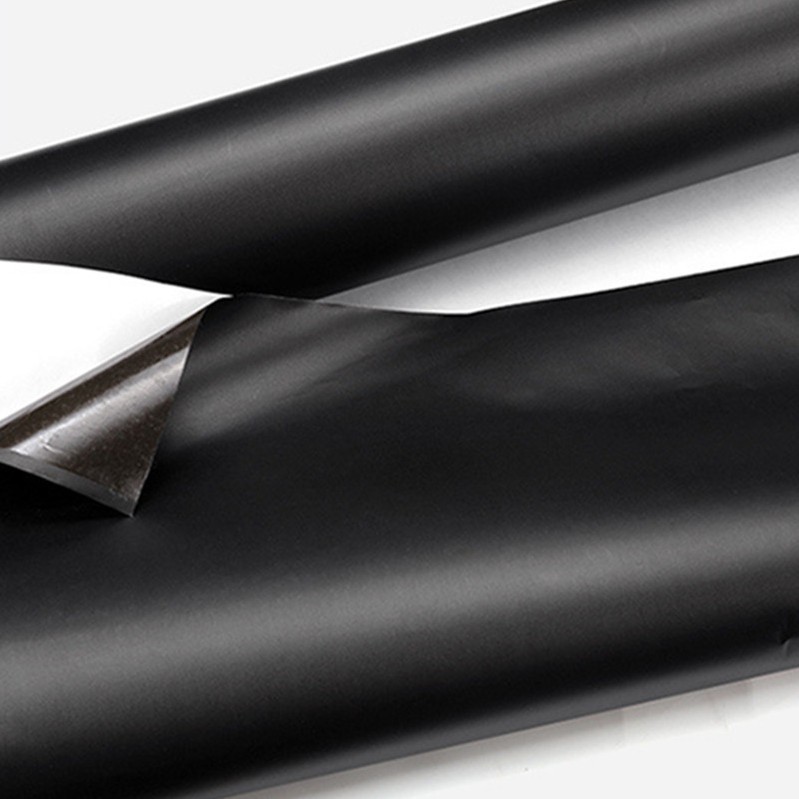
Pattern: Plain · Width: 1.06 m
Fabric thickness: 0.08±0.01 mm
View X00796 specifications →Use these catalog values for an initial comparison only. They should not be interpreted as proof of adhesion performance, installed shielding effectiveness or compliance certification.
| SKU | Pattern | Width | Fabric thickness | Glue paper thickness* | Surface resistance* |
|---|---|---|---|---|---|
| X00748 | Plain | 1.06 m | 0.08±0.01 mm | 0.03±0.005 mm | < 0.04 Ω |
| X00792 | Ripstop | 1.06 m | 0.08±0.01 mm | 0.03±0.005 mm | < 0.04 Ω |
| X00793 | Diamond | 1.06 m | 0.08±0.01 mm | 0.03±0.005 mm | < 0.04 Ω |
| X00794 | Plain | 1.06 m | 0.08±0.01 mm | 0.03±0.005 mm | < 0.04 Ω |
| X00795 | Plain | 1.06 m | 0.08±0.01 mm | 0.03±0.005 mm | < 0.04 Ω |
| X00796 | Plain | 1.06 m | 0.08±0.01 mm | 0.03±0.005 mm | < 0.04 Ω |
*Catalog terminology is preserved. “Glue paper thickness” is the supplied field name; confirm whether your project needs adhesive-layer thickness, liner thickness, or total laminate thickness. Surface-resistance values must be interpreted with the actual measurement method; conductive adhesive performance across an interface should be verified separately.
Tell us whether the material will attach to metal, plastic, coated surfaces or another fabric. Specify peel strength and handling requirements when relevant.
Check the conductive path across overlaps and joints, not only the top surface resistance. Assembly and grounding can affect outcomes.
Request sample size, roll format, test conditions and any documentation needed for your qualification process.
Related guidance: Testing & Evaluation, Self-Adhesive Conductive Fabric Guide and EMI Shielding Fabric Selection.
No. Adhesive and surface conductivity should be checked independently. Confirm the intended electrical path and test the actual bonded assembly.
The construction affects handling and material characteristics. Choose based on width, flexibility, appearance, lamination and mechanical needs, then validate installed shielding performance.
Contact OneThinktec with your target SKU, desired size, substrate, estimated order quantity and test requirements to discuss availability.
Share your target SKU, fabric dimensions, base material, bonding substrate, expected shielding environment and sample needs. We can discuss suitable catalog options and available documentation.
Request Information or Samples Browse All Products